1. Compression and Rarefaction:
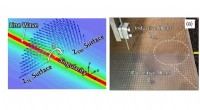
* Sound waves are longitudinal waves, meaning the vibrations travel in the same direction as the wave itself.
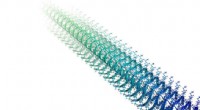
* When a sound source vibrates, it creates areas of high pressure (compressions) and low pressure (rarefactions) in the surrounding medium.
* These compressions and rarefactions travel outwards from the source, like ripples on a pond.
2. Particle Vibration:
* As the compressions and rarefactions pass through the material, they cause the particles within the material to vibrate.
* In solids, the particles are tightly packed, so the vibrations are transmitted quickly and efficiently.
* In liquids, the particles are less tightly packed, so the vibrations travel slower.
* In gases, the particles are very far apart, so the vibrations travel the slowest.
3. Energy Transfer:
* The vibrating particles transfer energy to their neighboring particles.
* This energy transfer continues through the material, allowing the sound wave to propagate.
4. Speed of Sound:
* The speed of sound depends on the properties of the material, primarily its elasticity and density.
* Materials that are more elastic and less dense allow sound waves to travel faster.
* For example, sound travels faster in steel than in water, and faster in water than in air.
In Summary:
Sound waves travel through materials by causing the particles within the material to vibrate in a back-and-forth motion. This vibration transfers energy from one particle to the next, allowing the sound wave to propagate through the material. The speed of sound varies depending on the properties of the material.