1. The object's mass: The more massive an object is, the stronger the gravitational force it experiences.
2. The gravitational field strength: This is determined by the mass of the object it's attracted to (like the Earth) and the distance between them.
Here's the formula to calculate the force of gravity:
F = G * (m1 * m2) / r²
Where:
* F is the force of gravity
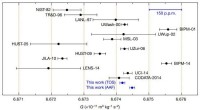
* G is the gravitational constant (approximately 6.674 x 10⁻¹¹ N m²/kg²)
* m1 is the mass of the first object
* m2 is the mass of the second object
* r is the distance between the centers of the two objects
In simpler terms:
* Heavier objects feel a stronger pull of gravity.
* Objects closer to a large mass (like the Earth) experience a stronger pull of gravity.
For example, a bowling ball will experience a stronger force of gravity than a feather because it has more mass. A feather on the surface of the Earth will experience a stronger force of gravity than a feather 100 kilometers above the Earth's surface because it's closer to the Earth's center.