Here's a breakdown:
* Mass: A fundamental property of matter, representing the amount of "stuff" in an object. It's measured in kilograms (kg).
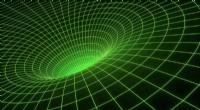
* Gravity: A force of attraction between any two objects with mass. The Earth exerts a gravitational force on everything near it.
* Weight: The force exerted on an object due to gravity. It's calculated by:
Weight (W) = Mass (m) x Acceleration due to Gravity (g)
* g is approximately 9.8 m/s² on Earth. This means for every second an object falls, its speed increases by 9.8 meters per second.
Important points:
* Weight is not the same as mass. Mass is a fundamental property, while weight is a force caused by gravity.
* Weight can vary. While mass stays constant, weight can change depending on the gravitational field. For example, an object weighs less on the Moon than on Earth because the Moon's gravity is weaker.
* Weight is a force, measured in Newtons (N).
* Mass is a measure of inertia, the tendency of an object to resist changes in motion. It's measured in kilograms (kg).
In summary: Weight is the force of gravity acting on an object's mass. It's a fundamental concept in physics and essential for understanding how objects interact with each other and with the gravitational forces around them.