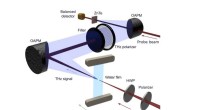
1. Absorption: When light is absorbed by matter, the energy of the light is transferred to the atoms or molecules of the material. This can cause the atoms or molecules to vibrate more rapidly, increasing their temperature. This is why dark objects get hotter in the sun than light objects.
2. Reflection: When light strikes a surface, it can be reflected off of it. This is why we can see objects – light reflects off them and enters our eyes. There are two types of reflection:
* Specular reflection: This is reflection off of a smooth surface, like a mirror, where the light reflects in a predictable direction.
* Diffuse reflection: This is reflection off of a rough surface, like a piece of paper, where the light reflects in many different directions.
3. Transmission: When light passes through matter, it is said to be transmitted. This is why we can see through windows and other transparent objects. The amount of light that is transmitted depends on the material and the wavelength of the light. Some materials are transparent to certain wavelengths but opaque to others (like glass, which transmits visible light but absorbs UV light).
These are just the most common ways light interacts with matter. There are other more complex phenomena like scattering, diffraction, and refraction that also describe the behavior of light when it encounters matter.