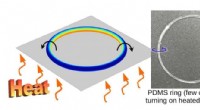
Conduction is the transfer of heat energy through a material by the direct contact of its particles. This occurs when vibrating particles of a hotter region collide with the less energetic particles in a cooler region, transferring energy through molecular collisions.
Key aspects of conduction:
* Requires direct contact: Heat transfer via conduction only happens when two objects or regions of the same object are physically touching.
* Molecular collisions: The energy transfer is primarily due to the kinetic energy of the molecules, which vibrate more rapidly at higher temperatures. These vibrations are transferred through collisions with neighboring molecules.
* Density and conductivity: The rate of conduction depends on the material's density and its thermal conductivity. Dense materials with high thermal conductivity (like metals) transfer heat more efficiently than less dense materials with low thermal conductivity (like air).
Examples:
* Heating a pan on a stove: Heat from the stovetop is transferred to the pan through conduction.
* Holding a hot cup of coffee: Heat from the coffee is transferred to your hand through conduction.
* Wearing a wool sweater: The fibers of the wool trap air, which has low thermal conductivity, preventing your body heat from escaping through conduction.
Note: Conduction is one of the three main modes of heat transfer, along with convection and radiation. Each mode has its own unique mechanisms and characteristics.