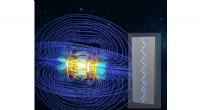
Induction is the process of redistributing charges within an object without direct contact. This happens when a charged object is brought near a neutral object, causing a shift in the distribution of charges within the neutral object. Here's how the movement of charge differs between insulators and conductors during induction:
Insulators:
* Limited charge movement: Insulators have tightly bound electrons that cannot easily move throughout the material.
* Polarization: When a charged object is brought near an insulator, the bound electrons within the insulator will slightly shift their positions. This creates a temporary separation of charges, with the opposite charges being attracted to the charged object and the same charges being repelled. This phenomenon is called polarization.
* No net charge transfer: The charges in an insulator remain bound to their atoms and do not flow freely. Therefore, there is no net transfer of charge from one location to another.
Conductors:
* Free charge movement: Conductors have free electrons that can easily move throughout the material.
* Charge redistribution: When a charged object is brought near a conductor, the free electrons are attracted or repelled, depending on the charge of the object. This causes a significant redistribution of charge within the conductor. The opposite charges accumulate near the charged object, and the same charges are repelled to the opposite side.
* Net charge transfer: As the charges redistribute, there is a net transfer of charge within the conductor. This creates a temporary difference in charge distribution, but the conductor remains overall neutral.
Here's an analogy:
Imagine a group of people standing close together. This represents the tightly bound electrons in an insulator. If you push someone from the side, the whole group will shift slightly, but no one leaves their spot. This is similar to polarization in an insulator.
Now imagine a group of people who can move freely. If you push someone from the side, people on that side will move away, and people on the other side will move in to fill the space. This is similar to charge redistribution in a conductor.
In summary:
* Insulators: Polarization, limited charge movement, no net charge transfer.
* Conductors: Charge redistribution, free charge movement, net charge transfer.
Important note: The charge separation induced in both insulators and conductors is temporary. When the charged object is removed, the charges in both types of materials will return to their original distribution.