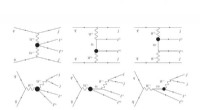
1. The angle of incidence is equal to the angle of reflection. This means the angle between the incoming light ray (incident ray) and the normal (a line perpendicular to the surface) is equal to the angle between the reflected light ray and the normal.
2. The incident ray, the reflected ray, and the normal all lie in the same plane. This means the three rays are all on a flat surface together.
These laws apply to both smooth (specular) and rough (diffuse) surfaces.
* Specular reflection occurs on smooth surfaces like mirrors. The light reflects in a single direction, creating a clear image.
* Diffuse reflection occurs on rough surfaces like a piece of paper. The light scatters in many directions, making the surface appear less shiny.
The laws of reflection are fundamental to understanding how we see objects and how light interacts with matter. They are used in many applications, including designing mirrors, telescopes, and other optical instruments.