1. Observation and Experimentation:
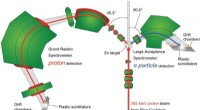
* Observation: Physicists start by meticulously observing the natural world. This could involve studying the behavior of stars, the interaction of particles, or the flow of fluids.
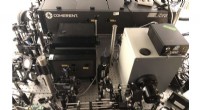
* Experimentation: They then design experiments to test their observations and gather more data. This data is essential for understanding the underlying principles of the observed phenomena.
2. Mathematical Modeling:
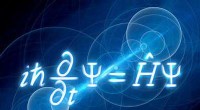
* Theoretical Framework: Based on observations and experiments, physicists develop mathematical models to describe the physical system under study. These models often involve equations that relate different physical quantities.
* Assumptions and Approximations: Models often make simplifying assumptions and approximations to make the problem more tractable. It's important to understand the limitations of these assumptions.
3. Intuition and Creativity:
* Hypothesis Generation: Physicists use intuition and creativity to generate hypotheses, which are educated guesses about the underlying physical principles.
* Imagination: They imagine new possibilities and explore different theoretical frameworks, often drawing inspiration from other fields of science or mathematics.
4. Prediction and Testing:
* Predictions: Once a hypothesis is formulated, physicists use their mathematical models to make predictions about the behavior of the system. These predictions can be tested through further experiments.
* Falsification: A key aspect of scientific inquiry is the possibility of falsifying a hypothesis. If experimental results contradict the predictions, the hypothesis is rejected or modified.
5. Iteration and Refinement:
* Feedback Loop: The process of observation, modeling, prediction, and testing is iterative. Results from experiments feed back into the development of new models and hypotheses.
* Refinement: Through this process, physicists refine their understanding of the physical world, leading to more accurate predictions and deeper insights.
Examples:
* Newton's Law of Gravity: Newton's law of gravity was developed by observing the motion of planets and apples falling from trees. He then used mathematical modeling to formulate his theory, which predicted the gravitational force between objects.
* Quantum Mechanics: Quantum mechanics was developed through a combination of experiments on the behavior of light and matter, and through the use of abstract mathematical models.
Key Points:
* No Guarantees: While physicists strive for accurate predictions, there's no guarantee that a prediction will always be correct.
* New Discoveries: Physics is constantly evolving, and new discoveries often lead to a revision of existing theories or the development of entirely new ones.
* The Scientific Method: The process of predicting and guessing in physics is fundamentally based on the scientific method, which involves observation, experimentation, hypothesis testing, and constant refinement.
In conclusion, predicting and guessing methods in physics are not merely about random speculation. They are a rigorous process that combines scientific observation, mathematical modeling, intuition, creativity, and the constant pursuit of falsification and refinement.