Here's how it works:
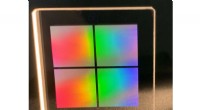
* The Disc: The disc is divided into segments of different colors, typically the primary colors (red, blue, yellow) and sometimes white and black.
* Rotation: When the disc is spun rapidly, the colors blend together due to the persistence of vision.
* Color Mixing: Our eyes cannot distinguish between the individual colors flashing rapidly, so they perceive a mixture of the colors. If the colors are properly balanced, the result is the perception of white light.
Why it works:
* Persistence of Vision: Our eyes retain an image for a fraction of a second after the actual light stimulus disappears. This is why we see a continuous motion in movies or animation.
* Additive Color Mixing: When different colors of light are mixed, the result is a different color that is the sum of the individual colors. This is different from subtractive color mixing, where pigments absorb light and produce darker shades.
In essence, Newton's disc demonstrates that white light is composed of various colors, and the perception of color can be manipulated through the rapid mixing of different colored lights.