High vapor pressure is directly related to weak intermolecular forces. Here's why:
* Vapor Pressure: Vapor pressure is the pressure exerted by the vapor of a liquid when it's in equilibrium with its liquid phase. A high vapor pressure means the liquid easily evaporates (turns into a gas).
* Intermolecular Forces: These are the attractive forces between molecules. Stronger intermolecular forces hold molecules together more tightly in the liquid phase.
Here's the connection:
* Weak Intermolecular Forces: When intermolecular forces are weak, molecules can escape from the liquid phase more easily. This leads to a higher concentration of molecules in the vapor phase, resulting in higher vapor pressure.
* Strong Intermolecular Forces: Strong intermolecular forces hold molecules together tightly, making it harder for them to escape into the gas phase. This results in lower vapor pressure.
Examples:
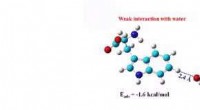
* Water (H₂O): Water has relatively strong hydrogen bonds, which contribute to its lower vapor pressure compared to, say, ethanol.
* Ethanol (C₂H₅OH): Ethanol has weaker hydrogen bonds than water, leading to a higher vapor pressure.
* Diethyl Ether (C₄H₁₀O): Diethyl ether has only weak London dispersion forces, making it very volatile (high vapor pressure).
In summary: A substance with a high vapor pressure will have weaker intermolecular forces. This is because the molecules can easily overcome the attractive forces and escape into the gas phase.