Here's a breakdown:
* Vibration: A back-and-forth or oscillating motion around an equilibrium point. Think of a pendulum swinging or a guitar string being plucked.
* Equilibrium position: The resting position of the vibrating object when it's not moving.
* Displacement: The distance of the object from its equilibrium position at any given time.
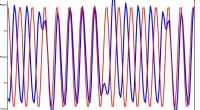
* Amplitude: The largest distance the object moves away from its equilibrium position.
Visualizing Amplitude:
Imagine a spring with a weight attached to it. When you pull the weight down and let go, it starts vibrating up and down.
* Equilibrium: The weight hangs straight down, at rest.
* Displacement: The weight moves up or down from this resting position.
* Amplitude: The maximum distance the weight moves either up or down from the equilibrium position.
Importance of Amplitude:
The amplitude of a vibration is a key characteristic because it determines:
* The intensity or loudness of sound waves: Larger amplitude means louder sound.
* The energy of the vibration: Higher amplitude means more energy.
* The visual appearance of the vibration: A larger amplitude will result in a wider swing or a more pronounced movement.
Let me know if you have any other questions about vibrations!