Here's how it works:
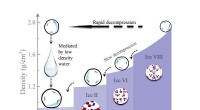
* Density: Density is a measure of how much mass is packed into a given volume. Denser substances have more mass in the same space.
* Buoyancy: Less dense substances tend to rise in a fluid (liquid or gas) because they are less affected by gravity.
* Convection: When there are differences in density within a fluid, the less dense parts will rise, and the denser parts will sink. This creates a cyclical movement called convection.
Examples of convection:
* Boiling water: The hot water at the bottom of a pot is less dense than the cooler water at the top. The hot water rises, the cool water sinks, and the process continues, creating the characteristic swirling motion.
* Weather patterns: Warm air is less dense than cold air, so warm air rises and cool air sinks. This creates wind patterns and influences weather systems.
* Earth's mantle: The heat from the Earth's core creates differences in density within the mantle, driving the slow, continuous movement of the mantle known as plate tectonics.
Convection is a fundamental process in many natural systems, playing a role in transferring heat, creating circulation patterns, and driving geological processes.