Here's a breakdown:
* Light ray: A straight line representing the path light travels.
* Reflection: The phenomenon where light bounces off a surface.
* Surface: The outer boundary of an object.
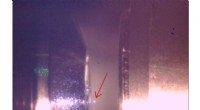
When a light ray hits a surface, it can be absorbed, transmitted, or reflected. In reflection, the light ray changes direction, bouncing off the surface. The angle of incidence (the angle at which the light ray hits the surface) is equal to the angle of reflection (the angle at which the light ray bounces off).
Here's an analogy: Imagine throwing a ball at a wall. The ball bounces back off the wall at an angle equal to the angle it hit the wall. That's similar to how light rays reflect.