1. Initial Conditions of the Solar System:
* The Big Bang: The initial expansion of the universe imparted momentum and energy to all matter, including the cloud of gas and dust that eventually formed our solar system.
* Gravitational Collapse: This cloud collapsed under its own gravity, spinning faster as it contracted. The spinning motion was conserved and eventually resulted in the formation of the Sun and planets, all with some degree of rotation.
2. Conservation of Angular Momentum:
* Angular momentum is a measure of an object's tendency to rotate.
* It's a fundamental law of physics that angular momentum is conserved in a closed system. This means that once something is spinning, it will continue to spin unless acted upon by an external force.
* The Earth's rotation is a result of the conservation of angular momentum from the initial formation of the solar system.
3. Gravitational Interactions:
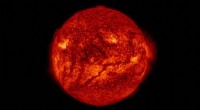
* The Earth is constantly being pulled on by the Sun's gravity, causing it to orbit in a nearly circular path. This orbit is not perfectly circular due to the gravitational influence of other planets and the Sun's own rotation.
* Additionally, the Moon's gravity exerts a pull on Earth, causing tides and slightly slowing down Earth's rotation over very long periods.
4. Earth's Internal Structure:
* The Earth's internal structure, with its molten core and rotating mantle, contributes to the Earth's rotation and magnetic field.
In summary, the Earth's constant motion is a result of the initial conditions of the solar system, the conservation of angular momentum, and the ongoing gravitational interactions between the Earth and other celestial bodies.