Here's a breakdown:
Key Characteristics:
* Repetitive: The force acts repeatedly over time.
* Regular Intervals: The time between each repetition is consistent.
* Can be Constant or Varying: The force can be the same strength each time or it can change in a predictable pattern.
Examples:
* A Swing: The force of gravity acting on a swing creates a periodic force, causing the swing to move back and forth.
* A Pendulum: The force of gravity on a pendulum creates a periodic force, causing it to oscillate.
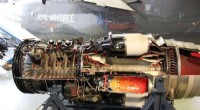
* A Piston in an Engine: The force from the combustion of fuel in a car engine is a periodic force, causing the piston to move up and down.
* Sound Waves: Sound waves are created by periodic changes in air pressure, which create periodic forces on our eardrums.
Importance:
Periodic forces are essential in many physical systems:
* Oscillations: Periodic forces are responsible for oscillations in systems like pendulums, springs, and musical instruments.
* Resonance: When a periodic force matches the natural frequency of a system, resonance occurs, leading to amplified vibrations.
* Waves: Periodic forces create waves in various mediums like water, air, and solids.
Understanding Periodic Forces:
* Frequency: The number of repetitions of the force per unit time (measured in Hertz, Hz).
* Period: The time it takes for one complete repetition of the force (measured in seconds).
* Amplitude: The maximum strength of the force.
In summary:
Periodic forces are forces that repeat at regular intervals, playing a crucial role in understanding oscillations, resonance, and waves. They are essential in various fields like physics, engineering, and music.