Here's why:
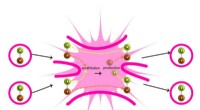
* Energy Loss: Every collision involves some energy loss, usually as heat and sound. Even perfectly elastic collisions (which don't exist in the real world) involve a tiny amount of energy loss.
* Inelastic Collision: The collision between the ball and the ground is considered an inelastic collision because some kinetic energy is lost during the impact. This means the ball will always bounce back to a lower height than it was dropped from.
So, while technically a collision where a ball bounces back to its original height is still a collision, it's an idealized scenario that doesn't happen in real life.