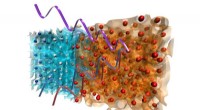
* Speed of light in different mediums: Light travels at different speeds in different mediums. It travels fastest in a vacuum, slower in air, and even slower in water or glass. This is because the light interacts with the atoms of the material, which slows it down.
* Angle of incidence: When light strikes a boundary between two mediums at an angle, part of the light wave enters the new medium while part of it is reflected.
* Snell's Law: The relationship between the angles of incidence and refraction is described by Snell's Law:
* n₁ sin θ₁ = n₂ sin θ₂
* Where:
* n₁ and n₂ are the refractive indices of the two mediums (a measure of how much light slows down in that medium).
* θ₁ is the angle of incidence.
* θ₂ is the angle of refraction.
* Change in direction: Because the speed of light changes at the boundary, the direction of the light wave also changes. This change in direction is called refraction. If the light is entering a medium where it travels slower, it bends towards the normal (the line perpendicular to the surface). If it enters a medium where it travels faster, it bends away from the normal.
In short, refraction occurs because the speed of light changes as it transitions from one medium to another, causing a change in direction to maintain a constant frequency.