1. Creating Magnetic Fields:
* Moving Charges: When charged particles move in a circle, they create a magnetic field around them. This principle is used in electromagnets, where a current (flow of charged particles) in a coil generates a magnetic field.
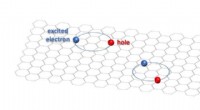
* Atomic Structure: The circular motion of electrons around the nucleus of an atom creates a magnetic field. This is responsible for the magnetic properties of certain materials.
2. Centripetal Force and Acceleration:
* Circular Motion: To keep a particle moving in a circle, a force must be applied towards the center of the circle. This is called the centripetal force. It causes the particle to accelerate constantly, even though its speed may be constant.
* Examples: This is seen in a spinning top, the motion of a planet around the sun, or a car turning a corner.
3. Waves:
* Circular Polarization: Light waves can be polarized, meaning their electric field oscillates in a specific plane. Circularly polarized light occurs when the electric field vector rotates in a circle as the wave travels. This can be achieved by passing light through a special material or using a specific arrangement of lenses.
* Water Waves: Circular motion of water molecules can generate waves on the surface of water, with the wave's shape determined by the pattern of the circular motion.
4. Quantum Mechanics:
* Atomic Orbitals: In quantum mechanics, the motion of electrons in atoms is not described by classical circular paths. However, electron orbitals can have shapes that resemble circular motions.
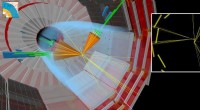
* Particle Physics: In particle physics, circular accelerators like the Large Hadron Collider use magnetic fields to keep particles in a circular path and accelerate them to high energies.
5. Practical Applications:
* Centrifuges: Used in many applications, from separating blood components to enriching uranium, rely on the circular motion of substances to achieve different densities.
* Gyroscopes: Used in navigation systems and other applications, utilize the principle of angular momentum, which is related to the rotational motion of objects.
It's important to note that giving particles a circular motion can be achieved in many ways, from external forces to intrinsic properties of the particles themselves. The specific effect will depend on the nature of the particles, the forces acting on them, and the environment in which they are moving.