1. Electromagnetic Force:
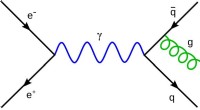
* Explanation: This force governs the interactions between electrically charged particles. It's responsible for holding atoms together, forming molecules, and creating chemical bonds. It also manifests as light, radio waves, and other forms of electromagnetic radiation.
* Examples: The attraction between opposite charges in a battery, the repulsion between like charges in a magnet, the light emitted by a star.
2. Strong Nuclear Force:
* Explanation: This force is the strongest of the fundamental forces. It holds protons and neutrons together in the nucleus of an atom, overcoming the electrostatic repulsion between protons. Without this force, atoms would be unstable and matter as we know it would not exist.
* Examples: The nucleus of an atom, the binding of quarks within protons and neutrons.
3. Weak Nuclear Force:
* Explanation: This force is responsible for radioactive decay, a process where unstable nuclei transform into more stable ones by emitting particles like electrons and neutrinos. It's weaker than the strong force but plays a crucial role in nuclear processes.
* Examples: The decay of a carbon-14 atom into nitrogen-14, the production of energy in the sun.
Important Note:
While these three forces are essential for understanding matter, they are not the only ones. There is also:
* Gravitational Force: This force is the weakest but acts over long distances. It is responsible for the attraction between objects with mass, such as planets and stars.
Therefore, while "three forces of matter" may not be a common term, these three key forces - electromagnetic, strong nuclear, and weak nuclear - are crucial for understanding the behavior of matter at its most fundamental levels.