* Thermometers use a property that changes with temperature. This is usually the volume of a liquid (like mercury or alcohol) or the resistance of a metal wire.
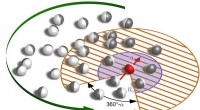
* When a thermometer is placed in contact with a substance, heat energy is transferred. This heat energy causes the particles of the substance to move faster, increasing the substance's temperature.
* The thermometer's property changes in response to the substance's temperature. For example, the liquid in a glass thermometer expands when it absorbs heat from a warmer substance.
* The change in the thermometer's property is calibrated to a scale. This scale (like Celsius or Fahrenheit) tells you the temperature of the substance being measured.
So, the particles inside the thermometer don't change temperature themselves. They act as a tool to measure the temperature of the substance they are in contact with.