Here's why:
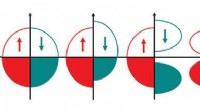
* Transverse Wave: In a transverse wave, the particles of the medium (the spring in this case) vibrate perpendicular to the direction the wave travels.
* Coiled Spring: If you move one end of the spring up and down (or side to side), the disturbance will travel along the spring, but the coils themselves move up and down (or side to side), perpendicular to the direction the wave travels.
Think of it like this:
* Imagine the spring is a rope.
* If you shake the rope up and down, the wave travels along the rope, but the rope itself moves up and down.
Let me know if you'd like more details on transverse waves!