Here's a breakdown:
1. Interference:
* What is it? When two or more waves (light, sound, etc.) interact, they can either reinforce or cancel each other out depending on their relative phases.
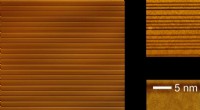
* How fringes form: When two coherent light waves (waves with a fixed phase relationship) interfere, the resulting pattern shows alternating bright and dark regions. The bright regions correspond to constructive interference (waves reinforcing each other), while the dark regions correspond to destructive interference (waves canceling each other out).
* Examples:
* Young's Double Slit Experiment: Shining light through two narrow slits creates interference patterns on a screen behind the slits.
* Thin films: The iridescent colors seen on soap bubbles or oil slicks are due to interference of light reflected from the front and back surfaces of the thin film.
2. Diffraction:
* What is it? Diffraction occurs when waves bend around obstacles or spread out through openings.
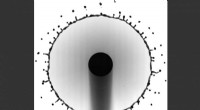
* How fringes form: When light waves pass through a narrow aperture (like a single slit) or around a small obstacle, they spread out and interfere with each other. This interference creates a pattern of bright and dark bands (fringes) on a screen behind the aperture or obstacle.
* Examples:
* Single Slit Diffraction: Shining light through a narrow slit creates a diffraction pattern with a central bright band and alternating dark and bright bands on either side.
* Diffraction grating: A diffraction grating is a device with many parallel slits that produces a distinct diffraction pattern.
Key Features of Fringes:
* Spacing: The spacing between fringes depends on the wavelength of the light, the distance between the slits/obstacles, and the distance to the screen.
* Intensity: The brightness of the fringes depends on the amplitude of the interfering waves.
Applications:
* Spectroscopy: Diffraction gratings are used in spectrometers to separate light into its different wavelengths, allowing us to study the composition of materials.
* Holography: Holography uses interference patterns to create three-dimensional images.
* Fiber optics: Fringes play a role in the functioning of optical fibers, which use total internal reflection to transmit light signals.
Understanding fringes is essential for studying the wave nature of light and its applications in various technologies.