Here's why:
* Wave-like behavior: Light exhibits wave-like properties such as:
* Diffraction: Light bends around corners or obstacles.
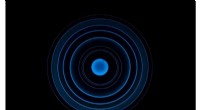
* Interference: Waves from two sources can interact, creating patterns of constructive and destructive interference.
* Polarization: Light waves can oscillate in specific directions.
* Particle-like behavior: Light also exhibits particle-like properties, known as photons:
* Photoelectric effect: Electrons are emitted from a metal surface when light shines on it. This effect is best explained by the idea that light is composed of discrete packets of energy called photons.
* Compton scattering: X-rays scatter off electrons, and the scattered X-rays have a longer wavelength. This phenomenon is also explained by the interaction of photons with electrons.
So, what's the explanation?
The true nature of light is not fully understood, but the prevailing view is that light is neither purely wave nor purely particle. It's a complex entity that exhibits both wave-like and particle-like behaviors depending on how it's observed.
This duality is one of the most profound concepts in quantum mechanics, and it has led to a revolution in our understanding of the universe.