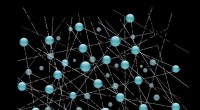
* Direction of motion: P-waves travel through a medium by compressing and expanding the particles in the direction the wave is traveling. Imagine a slinky: when you push one end, the compression travels down the slinky.
* Particle motion: The particles in the medium oscillate back and forth in the same direction as the wave is propagating. This is why they are called longitudinal waves.
* Speed: P-waves are the fastest type of seismic wave, traveling through both solids and liquids. Their speed depends on the density and elasticity of the material they travel through.
* Effect: P-waves are the first to arrive at a seismograph after an earthquake. They cause a shaking motion in the ground that can be felt as a jolt or a thump.
Here's a simple analogy:
Imagine a line of people standing close together. When you push the first person, they bump into the next, who bumps into the next, and so on. This is similar to how a P-wave travels. The compression travels through the line, not the people themselves.
Key takeaways:
* P-waves are compressional waves that travel by compressing and expanding the medium.
* Their particles move in the same direction as the wave.
* They are the fastest seismic waves and arrive first at a seismograph.
Let me know if you want to know more about P-waves or seismic waves in general.