1. Underlying principles: Both technology and physics deal with the fundamental laws of nature. Technology utilizes these laws to create practical applications, while physics aims to understand and explain these laws.
2. Experimentation and Observation: Both fields rely heavily on experimentation and observation. Physicists conduct experiments to test theories and discover new phenomena, while engineers use experiments to test prototypes and optimize designs.
3. Problem-solving: Both technology and physics involve problem-solving. Physicists aim to explain observed phenomena and solve theoretical puzzles, while engineers apply physical principles to solve practical problems.
4. Innovation and creativity: Both fields require innovation and creativity. Physicists develop new theories and models, while engineers invent new technologies and solutions.
5. Mathematical foundation: Both physics and technology rely heavily on mathematical tools and frameworks. Physics uses mathematics to express its laws and theories, while engineers use mathematics to model, analyze, and design systems.
6. Interdependence: Technology often depends on advances in physics. For example, the development of transistors and integrated circuits was made possible by breakthroughs in quantum physics. Conversely, technology provides tools and opportunities for new physics research.
7. Impact on society: Both technology and physics have profound impacts on society. Technological advancements drive economic growth and improve our lives, while physics research leads to fundamental understanding of the universe and advances in medicine, energy, and other fields.
Examples of the relationship between technology and physics:
* Electronics: The development of transistors, integrated circuits, and other semiconductor devices was made possible by advances in quantum physics.
* Energy: Nuclear power plants rely on principles of nuclear physics, while solar panels utilize the principles of photovoltaics.
* Communication: Wireless communication relies on electromagnetic waves, a fundamental concept in physics.
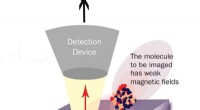
* Medicine: Medical imaging techniques like MRI and PET scans are based on principles of nuclear physics and magnetic fields.
In conclusion, technology and physics are deeply interconnected fields, with technology building upon the foundations laid by physics and physics benefiting from technological advancements. Both disciplines are driven by a common desire to understand the world around us and to develop new solutions for the challenges we face.