Everyday Examples:
* Billiard Balls: When billiard balls collide, they bounce off each other with minimal energy loss. This is why you can see the balls continue moving after impact.
* Superballs: Superballs are designed to bounce back with minimal energy loss, making them great for demonstrating elastic collisions.
* Atoms in a Gas: In an ideal gas, atoms collide with each other and the walls of their container with minimal energy loss. This is the basis for the kinetic theory of gases.
* Two Perfectly Smooth, Hard Balls: Imagine two perfectly smooth, hard balls colliding. In a perfect world, they'd bounce off each other with no energy loss. However, this is an idealized scenario, as real-world materials always have some energy loss.
Scientific Examples:
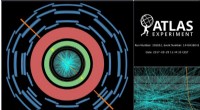
* Particle Collisions in Accelerators: In particle accelerators, particles are accelerated to very high speeds and then collide with each other. While some collisions result in the creation of new particles (inelastic collisions), some collisions are elastic, where kinetic energy is conserved.
* Collisions of Elementary Particles: At the most fundamental level, collisions between elementary particles (like electrons and photons) are often considered elastic. This is a key area of study in particle physics.
Important Notes:
* Perfectly elastic collisions are rare in the real world: Even in seemingly elastic collisions, some energy is always lost due to factors like:
* Sound: The collision produces sound, which carries away some energy.
* Heat: Some energy is converted into heat due to friction within the objects.
* Deformation: Even slight deformation of the objects during collision can lead to energy loss.
* The more rigid and less deformable the objects, the more elastic the collision: This is why hard balls and smooth surfaces tend to lead to more elastic collisions.
Let me know if you'd like to explore any of these examples in more detail!