1. Transverse Waves:
* Imagine a rope tied to a wall. When you flick the rope up and down, you create a wave that travels along the rope.
* The particles in a transverse wave move perpendicular to the direction the wave travels. In our rope example, the particles move up and down while the wave travels horizontally.
* Examples: Light waves, electromagnetic waves, waves on a string.
2. Longitudinal Waves:
* Imagine a slinky. When you push and pull one end of the slinky, you create a wave that travels along the slinky.
* The particles in a longitudinal wave move parallel to the direction the wave travels. In our slinky example, the particles move back and forth in the same direction the wave is travelling.
* Examples: Sound waves, seismic waves (P-waves).
3. Wave-Particle Duality:
* This is where things get really interesting! Some waves, like light, can behave as both a wave and a particle.
* This is the heart of quantum mechanics and leads to some mind-bending concepts like photons, the particle of light.
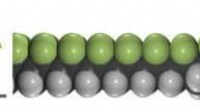
* Imagine a wave traveling, but instead of thinking of the wave as a continuous smooth movement, imagine it as a series of discrete energy packets (particles) moving together.
* The wave-particle duality means that sometimes we can describe light as a wave, and sometimes we can describe it as a particle, depending on the experiment.
In summary:
* Transverse waves: Particles move perpendicular to wave direction.
* Longitudinal waves: Particles move parallel to wave direction.
* Wave-particle duality: Some waves exhibit both wave-like and particle-like properties.
It's worth remembering that the movement of particles in waves is not simply about individual particles bouncing around. It's about the collective motion of many particles, which is what creates the wave phenomenon.