1. Fluxgate Magnetometer:
* Core: These devices use a core of ferromagnetic material (like permalloy) that is easily magnetized and demagnetized.
* Coil: A coil is wrapped around the core, creating a changing magnetic field.
* Detection: The changing field induces a current in a second coil, which is proportional to the strength of the external magnetic field.
2. Proton Precession Magnetometer (PPM):
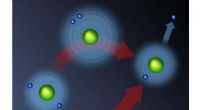
* Polarization: Protons in a liquid (often water) are aligned by applying a strong magnetic field.
* Precession: When the strong field is removed, the protons precess (wobble) at a frequency proportional to the Earth's magnetic field.
* Detection: This precession frequency is measured and converted to a magnetic field value.
3. Overhauser Magnetometer:
* Similar to PPM: This type also relies on proton precession, but it uses a special technique to improve signal strength.
* Polarization Enhancement: A small amount of a free radical compound is added to the liquid, which increases the polarization of the protons.
* Result: This leads to a stronger signal, allowing for higher sensitivity and accuracy.
4. SQUID (Superconducting Quantum Interference Device) Magnetometer:
* Superconductivity: These devices utilize superconducting loops that are extremely sensitive to magnetic fields.
* Josephson Junctions: The loops contain junctions that exhibit the Josephson effect, where current can flow across an insulator due to quantum tunneling.
* Interference: Changes in the external magnetic field cause interference patterns in the current flow through the junctions, allowing for extremely precise measurements.
5. Hall Effect Magnetometer:
* Hall Effect: This effect describes the generation of a voltage across a conductor when it is placed in a magnetic field and current flows through it.
* Measurement: The voltage is proportional to the magnetic field strength, allowing for its measurement.
* Simple & Cost-Effective: Hall effect magnetometers are relatively simple and inexpensive compared to other types.
Applications:
Magnetometers are used in a wide range of applications, including:
* Navigation: Compasses and GPS systems rely on magnetometers to determine direction and location.
* Geology: Geophysicists use magnetometers to explore the Earth's magnetic field and identify mineral deposits.
* Medical: Magnetoencephalography (MEG) uses magnetometers to measure brain activity.
* Military: Magnetometers are used to detect submarines and other metal objects.
* Space Exploration: Magnetometers are used to study the magnetic fields of planets and stars.
In summary, magnetometers are essential tools for measuring magnetic fields, finding applications in diverse fields where understanding and measuring magnetic fields is crucial.