Here's a breakdown of why:
* Bohr Model: This model, while historically significant, depicts electrons orbiting the nucleus in defined circular paths. It's a helpful starting point for understanding basic atomic structure but inaccurate in depicting the true behavior of electrons.
* Quantum Mechanics: The modern understanding of atomic structure relies on quantum mechanics. This theory states that electrons don't follow classical orbits like planets around a star. Instead, they occupy probability clouds called atomic orbitals.
* Atomic Orbitals: These orbitals represent regions of space where an electron is most likely to be found. They have various shapes, including spherical (s orbitals), dumbbell-shaped (p orbitals), and more complex shapes (d and f orbitals).
* Energy Levels: Electrons exist in different energy levels within the atom. Each energy level corresponds to a set of orbitals.
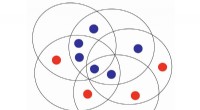
So, why do we sometimes see elliptical shapes associated with electrons?
* Transitions: When an electron moves between energy levels, it can sometimes temporarily occupy a state that resembles an elliptical orbit. This is a short-lived phenomenon called an excited state.
* Mathematical Models: Certain quantum mechanical models use elliptical functions to describe the behavior of electrons, but these models are simplifications and don't represent the complete picture.
In conclusion, electrons don't follow elliptical paths in a classical sense. Their behavior is governed by quantum mechanics, and they exist in probability clouds called atomic orbitals.