Transportation:
* Driving a car: Newton's laws of motion are at work, explaining how the car accelerates, brakes, and turns. Friction, another mechanical principle, keeps the tires gripping the road.
* Flying in an airplane: Aerodynamics, a subset of mechanics, explains how the wings generate lift and how the plane maneuvers through the air.
* Riding a bicycle: Balance, momentum, and friction all play a role in keeping you upright and moving forward.
Everyday Activities:
* Walking: Mechanics explains the forces involved in each step, from the push-off with your foot to the swing of your arms.
* Throwing a ball: Understanding the mechanics of projectile motion helps you aim and throw accurately.
* Lifting objects: Understanding forces and leverage helps you use your muscles efficiently and avoid injury.
* Playing sports: From the swing of a golf club to the spin of a tennis ball, mechanics is crucial for understanding and improving athletic performance.
Household items:
* Opening a door: Simple machines like levers and hinges are based on mechanical principles.
* Using a hammer: The force of impact, leverage, and momentum all play a role in driving a nail.
* Turning a faucet: The rotation of a valve is governed by mechanical principles.
* Using a washing machine: Centrifugal force is used to remove water from clothes.
Beyond these examples:
* Construction: Mechanics is used to design and build structures that can withstand forces and stresses.
* Manufacturing: Mechanics is used to design and operate machines and production lines.
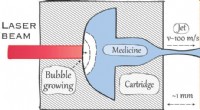
* Medicine: Mechanics is used to understand the movement of the human body, diagnose injuries, and develop surgical techniques.
In essence, mechanics is everywhere in our lives. It's the foundation of our understanding of how the world works, from the smallest atom to the largest galaxy.