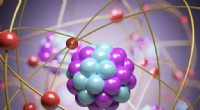
1. Fundamental Nature: Physics deals with the most basic building blocks of the universe and the fundamental laws that govern their behavior. It explores the nature of matter, energy, space, time, and their interactions. This makes it the foundation upon which other sciences, such as chemistry and biology, are built.
2. Emphasis on Quantification: Physics is highly quantitative, relying heavily on mathematics to describe and predict natural phenomena. It seeks to express natural laws in the form of precise equations and mathematical models. This allows for rigorous testing and verification of theories.
3. Focus on Simplicity and Universality: Physics aims to find the simplest possible explanations for complex phenomena. It seeks to identify universal laws that apply across all scales and situations, from the subatomic world to the vastness of the cosmos.
4. Experimental Approach: Physics relies heavily on experimentation to test and validate its theories. Scientists design experiments to measure and manipulate physical quantities, gather data, and draw conclusions about the underlying laws.
5. Interdisciplinary Nature: Physics has strong connections to other sciences, influencing and being influenced by them. For example, it plays a crucial role in understanding chemical reactions, the behavior of biological systems, and the evolution of the universe.
Here's a table highlighting some key differences between physics and other sciences:
| Feature | Physics | Chemistry | Biology |
|---|---|---|---|
| Focus | Fundamental laws of nature, matter, energy | Composition, structure, properties of matter | Living organisms, their structure, function, and interactions |
| Methodology | Emphasis on mathematical modeling and experimentation | Laboratory experiments, chemical analysis | Observations, experiments, molecular biology |
| Scope | Universal laws, applicable to all scales | Specific to chemical substances and reactions | Specific to living organisms and systems |
| Application | Foundation for other sciences, technology development | Development of new materials, medicine | Understanding life processes, medicine, agriculture |
In conclusion: While physics is a distinct field with its own unique characteristics, it is also deeply interconnected with other sciences. Its fundamental nature and focus on simplicity and universality make it a crucial foundation for understanding the world around us.