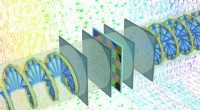
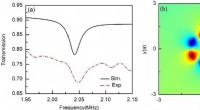
Here's a breakdown:
* Vibration: A back-and-forth motion or oscillation.
* Frequency: The number of vibrations per second, measured in Hertz (Hz).
* Natural Frequency: The frequency at which an object vibrates most easily and with the largest amplitude when disturbed.
Here's an analogy:
Think of a swing. It has a natural frequency, the rate at which it swings back and forth when you give it a gentle push. If you push the swing at its natural frequency, it will swing higher and higher. If you push it at a different frequency, it will be less efficient and the swing won't go as high.
Factors affecting natural frequency:
* Mass: Heavier objects tend to have lower natural frequencies.
* Stiffness: Stiffer objects tend to have higher natural frequencies.
* Shape and Size: The shape and size of an object can also affect its natural frequency.
Importance of natural frequency:
Understanding the natural frequency of an object is important in many fields, including:
* Engineering: Designing structures and machines that can withstand vibrations without failing (e.g., bridges, buildings, airplanes).
* Music: Understanding how different instruments produce different sounds based on their natural frequencies.
* Medicine: Using sound waves to diagnose and treat medical conditions (e.g., ultrasound, MRI).
Let me know if you'd like more details on any of these aspects!