1. Maxwell's Equations:
* James Clerk Maxwell, in the 19th century, developed a set of equations that describe the behavior of electric and magnetic fields. These equations revealed a fundamental relationship between the speed of light, the permittivity of free space (ε₀), and the permeability of free space (μ₀).
* The equation is: c = 1 / √(ε₀μ₀)
2. Experimental Verification:
* Fizeau's Experiment (1849): Hippolyte Fizeau measured the speed of light using a rotating toothed wheel and a mirror. He shone light through the gaps in the rotating wheel and reflected it back onto itself. By measuring the rotation speed of the wheel and the distance the light traveled, he calculated the speed of light.
* Michelson-Morley Experiment (1887): This experiment attempted to detect a hypothetical medium called "luminiferous aether" through which light was thought to propagate. The experiment failed to detect this medium, ultimately leading to the special theory of relativity.
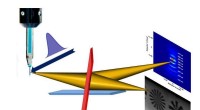
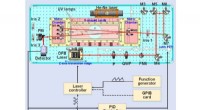
* Modern Techniques: Today, the speed of light is measured with incredible accuracy using sophisticated techniques such as interferometry and laser spectroscopy.
3. The Role of the Vacuum:
* The speed of light in a vacuum is the highest possible speed for any physical entity.
* The speed of light in a medium (like air or water) is always slower than in a vacuum because the light interacts with the medium's atoms and molecules.
Value of the Speed of Light:
The speed of light in a vacuum, c, is approximately:
* 299,792,458 meters per second (m/s)
Significance:
The speed of light is a crucial constant in physics, playing a fundamental role in:
* Special Relativity: Einstein's theory of special relativity is built on the principle that the speed of light is constant for all observers, regardless of their own motion.
* Electromagnetism: The speed of light is directly related to the fundamental constants of electricity and magnetism.
* Cosmology: The speed of light is used to measure distances in the universe and to understand the expansion of the universe.
In summary, we know the speed of light in a vacuum through a combination of Maxwell's equations, experimental verification, and its fundamental role in various areas of physics.