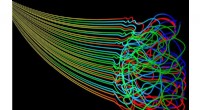
* Velocity: Velocity describes both the speed of an object (how fast it's moving) and its direction.
* Acceleration: Acceleration describes how the velocity of an object changes over time.
Think of it like this:
* Constant velocity: Imagine driving a car on a straight, empty highway at a steady 60 mph. You're moving at a constant speed in a constant direction.
* Acceleration: Now, imagine hitting the gas pedal. You're increasing your speed (and therefore your velocity). You're accelerating.
Key Points:
* No change, no acceleration: If an object's velocity isn't changing – neither its speed nor its direction – then it's not accelerating.
* Acceleration requires a change: To accelerate, an object must either:
* Speed up: Increase its speed.
* Slow down: Decrease its speed.
* Change direction: Even if its speed stays the same, changing direction means its velocity is changing.
Example:
* A car traveling in a circle at a constant speed is still accelerating because its direction is constantly changing.
* A ball dropped from a building is accelerating due to gravity, which is constantly increasing its speed as it falls.
Let me know if you'd like more examples!