Imagine you're on a rollercoaster, soaring up a steep incline. As you climb, your speed gradually decreases. At the peak, you momentarily pause before plummeting back down. As you descend, you feel the thrill of increasing speed.
This is a perfect example of gravity causing a change in velocity. Here's why:
* Gravity's Pull: The Earth's gravitational force constantly pulls you towards its center. This force acts on you throughout the rollercoaster ride, but its effect is more pronounced at different points.
* Climbing the Hill: As you climb the incline, gravity works against your motion, slowing you down. Your velocity decreases because the force of gravity is acting in the opposite direction to your movement.
* The Peak: At the peak, you momentarily stop. Your velocity is zero because gravity has successfully reduced your upward velocity to zero.
* Descending the Hill: Once you start going down, gravity now assists your motion. The force of gravity acts in the same direction as your movement, causing your velocity to increase.
Key takeaway: Gravity constantly exerts a force on objects, causing changes in their velocity. It can act against an object's motion, slowing it down, or it can act with an object's motion, speeding it up.
This principle applies to many situations:
* A ball thrown into the air: Gravity slows the ball down as it goes up and speeds it up as it comes down.
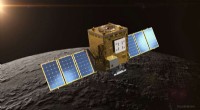
* A satellite in orbit: Gravity constantly pulls the satellite towards Earth, changing its direction but keeping it in a circular path.
* A falling apple: Gravity accelerates the apple towards the ground, increasing its velocity until it hits the Earth.
In essence, gravity is the driving force behind changes in velocity, shaping the motion of objects in our universe.