Here's a breakdown:
* Wave cycle: A complete oscillation of the wave, from its highest point (crest) to its lowest point (trough) and back to the starting point.
* Frequency: Measured in Hertz (Hz), which represents one cycle per second. A higher frequency means more cycles pass a point in the same amount of time.
Think of it like this:
Imagine you're watching waves crashing on a beach. The frequency tells you how many waves hit the shore every minute.
Here's how frequency relates to other wave properties:
* Wavelength: The distance between two consecutive crests or troughs. Frequency and wavelength are inversely proportional: higher frequency means shorter wavelength.
* Speed: The rate at which the wave travels. Frequency, wavelength, and speed are related: speed = frequency x wavelength.
Examples:
* Sound waves: High frequency sound waves correspond to high-pitched sounds, while low frequency sound waves correspond to low-pitched sounds.
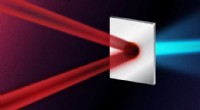
* Light waves: Different colors of light correspond to different frequencies. Red light has a lower frequency than blue light.
In summary, frequency is a key characteristic of waves that describes how often they oscillate.