Here's a more detailed explanation:
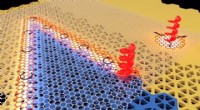
* Friction arises from the interaction between the microscopic irregularities on the surfaces of the objects in contact. These irregularities, even if seemingly smooth to the naked eye, interlock and create resistance to movement.
* Friction always acts in the opposite direction to the intended motion. If you try to slide a book across a table, friction acts to resist that sliding motion, making it harder to move the book.
* Friction is a force that converts kinetic energy into heat energy. This is why rubbing your hands together creates warmth; the friction between your hands converts the energy of motion into heat.
There are different types of friction, including:
* Static friction: The force that prevents an object from moving when a force is applied to it. This is the friction you feel when trying to push a heavy box that's not moving yet.
* Kinetic friction: The force that opposes motion when an object is already moving. This is the friction you feel when you slide the box across the floor.
* Rolling friction: The force that resists the rolling motion of a round object. This is the friction you feel when rolling a ball across the floor.
Understanding friction is important in many aspects of life, from designing cars and airplanes to understanding how our bodies move.