1. Drag Force:
* The fluid resists the object's motion, creating a drag force that opposes its movement. This force depends on:
* Fluid viscosity: Thicker fluids (like honey) create more drag than thinner fluids (like air).
* Object shape: Streamlined shapes experience less drag than bulky shapes.
* Object speed: Drag increases significantly as speed increases.
* Surface area: Larger surface areas experience more drag.
2. Pressure Differences:
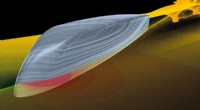
* The object creates pressure differences in the fluid. The pressure in front of the object is higher than behind it. This difference causes a pressure drag, which contributes to the overall drag force.
3. Friction:
* There is friction between the object's surface and the fluid molecules. This friction creates a skin friction that also contributes to the drag force.
4. Turbulent Flow:
* At higher speeds, the fluid flow around the object can become turbulent, creating eddies and swirls that increase drag.
5. Lift Force:
* In some cases, the shape of the object and the fluid flow around it can create a lift force, which acts perpendicular to the drag force. This is how airplanes fly.
6. Wake:
* The object leaves a trail of disturbed fluid behind it, called a wake. This wake can create additional drag, depending on the object's shape and speed.
Overall, the interaction between an object and a fluid is complex and depends on many factors. Understanding these factors is crucial in designing objects that move efficiently through fluids, like airplanes, boats, and cars.