Solids:
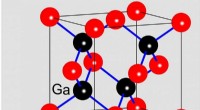
* Particle arrangement: Particles are tightly packed in a regular, crystalline structure.
* Motion: Particles vibrate in fixed positions around their equilibrium points. They have very limited translational (moving from place to place) and rotational freedom.
* Energy: Particles possess low kinetic energy due to their restricted motion.
* Density: High density due to close packing.
* Shape and volume: Solids have a fixed shape and volume.
Liquids:
* Particle arrangement: Particles are closer than in gases but less ordered than in solids. They can move around each other.
* Motion: Particles have more freedom to move around than in solids, but they are still constrained by their neighbors. They exhibit translational, vibrational, and some rotational motion.
* Energy: Particles have higher kinetic energy than solids, allowing them to move more freely.
* Density: Density is generally higher than gases but lower than solids.
* Shape and volume: Liquids take the shape of their container but have a fixed volume.
Gases:
* Particle arrangement: Particles are far apart and randomly distributed.
* Motion: Particles move freely and randomly in all directions. They exhibit significant translational, vibrational, and rotational motion.
* Energy: Particles have the highest kinetic energy among the three states of matter.
* Density: Low density due to large spacing between particles.
* Shape and volume: Gases take the shape and volume of their container.
In summary:
| State of Matter | Particle Arrangement | Motion | Energy | Density | Shape & Volume |
|---|---|---|---|---|---|
| Solid | Tightly packed, ordered | Vibrational | Low | High | Fixed |
| Liquid | Closer, less ordered | Translational, vibrational, some rotational | Medium | Medium | Fixed volume, takes shape of container |
| Gas | Far apart, random | Translational, vibrational, rotational | High | Low | Takes shape and volume of container |
This difference in particle motion is the reason why solids are rigid, liquids are fluid, and gases are compressible.