The Basics
* Thermal Conduction: The transfer of heat energy through a material by the direct contact and collision of particles.
* Particle Speed and Temperature: The average speed of particles within a material is directly related to its temperature. Higher temperatures mean faster particles.
How Thermal Conduction Works
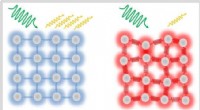
1. Energy Transfer: When a portion of a solid is heated, its particles gain kinetic energy and move faster.
2. Collisions: These faster particles collide with neighboring particles that are moving more slowly.
3. Energy Transfer Through Collisions: Through these collisions, the faster particles transfer some of their kinetic energy to the slower particles.
4. Increase in Speed: This energy transfer causes the slower particles to speed up, raising the temperature of that portion of the solid.
5. Conduction Chain: The process continues as the now-faster particles collide with their neighbors, transferring energy and increasing their speed.
Important Points
* Speed Distribution: Even within a solid at a constant temperature, particles have a range of speeds. Thermal conduction causes the *average* speed of the particles in the colder region to increase and the *average* speed of the particles in the hotter region to decrease.
* No Net Movement: Thermal conduction primarily involves the transfer of energy, not the transfer of matter. While particles vibrate and collide, they don't necessarily move from one location to another in a bulk sense.
In Summary: Thermal conduction in a solid increases the average speed of particles in the colder region and decreases the average speed of particles in the hotter region, eventually leading to a more uniform temperature throughout the material.