Here's a breakdown:
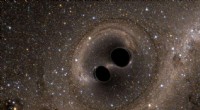
* Gravity: A fundamental force of attraction between any two objects with mass. The more massive the objects, the stronger the gravitational pull.
* Earth's gravity: Earth has a large mass, so it exerts a strong gravitational pull on everything near it, including you!
* Weight: The force of gravity acting on an object's mass. It's measured in units like Newtons (N) or pounds (lbs).
Formula for Weight:
Weight (W) = Mass (m) × Acceleration due to gravity (g)
* Mass: The amount of matter in an object.
* Acceleration due to gravity (g): A constant value on Earth, approximately 9.8 m/s².
Key points to remember:
* Weight is not the same as mass. Mass is a measure of how much matter an object contains, while weight is a measure of the force of gravity acting on that mass.
* Weight can vary depending on location. While Earth's gravity is generally constant, slight variations can occur depending on altitude and latitude.
Let me know if you'd like to explore specific examples or calculations related to weight!