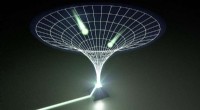
* Gravity is a force: It's not a property of an object itself. It's an interaction between objects with mass.
* Gravity acts between two objects: It's not just the Earth pulling on an object, but rather the object pulling on the Earth as well.
* The strength of gravity depends on mass and distance: The more massive the objects, the stronger the gravitational force. The closer the objects, the stronger the force.
So, how do we describe the gravitational force?
We use Newton's Law of Universal Gravitation:
* F = G * (m1 * m2) / r^2
Where:
* F is the force of gravity
* G is the gravitational constant (approximately 6.674 × 10^-11 m^3 kg^-1 s^-2)
* m1 and m2 are the masses of the two objects
* r is the distance between the centers of the two objects
Example:
Let's say we have a 1 kg object on the surface of the Earth. We can calculate the force of gravity (which we call weight) using this formula:
* m1 = 1 kg (the object's mass)
* m2 = 5.972 × 10^24 kg (the Earth's mass)
* r = 6,371,000 m (the Earth's radius)
Plugging these values into the formula, we get a force of approximately 9.8 N (Newtons). This is why we say the acceleration due to gravity on Earth is 9.8 m/s^2.
Important note: The above calculation is a simplification. It assumes the objects are point masses, which is not entirely accurate. However, it gives a good approximation for most everyday scenarios.