Electromagnet:
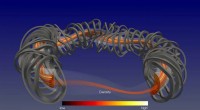
* Definition: An electromagnet is a temporary magnet created by passing an electric current through a coil of wire. The magnetic field produced is proportional to the current and the number of turns in the coil.
* Nature: It's an electromagnetic phenomenon where electric current generates a magnetic field.
* Components: Made of a wire coil and a core material (often iron).
* Function: Used in various applications like motors, generators, speakers, and magnetic levitation.
Mechanical Wave:
* Definition: A mechanical wave is a disturbance that travels through a medium by transferring energy without transferring matter.
* Nature: It's a physical disturbance that propagates through a medium.
* Components: Requires a medium (like air, water, or a string) to travel.
* Function: Various types of mechanical waves exist, including sound waves, water waves, and seismic waves, each with their own characteristics and applications.
Key Differences:
* Nature: Electromagnets are based on electromagnetism, while mechanical waves are based on mechanical vibrations.
* Medium: Electromagnets don't require a medium to exist, whereas mechanical waves need a medium to propagate.
* Energy Transfer: Electromagnets don't transfer energy through a medium, while mechanical waves transfer energy by transferring momentum between particles in the medium.
In simpler terms:
* An electromagnet is like a temporary magnet you can turn on and off with electricity.
* A mechanical wave is like a ripple in water, where the water molecules move up and down, but the wave itself travels forward.
Here's a table summarizing the key differences:
| Feature | Electromagnet | Mechanical Wave |
|---|---|---|
| Nature | Electromagnetic | Mechanical |
| Medium | Not required | Required |
| Energy Transfer | Doesn't transfer energy | Transfers energy |
| Examples | Motors, generators, speakers | Sound waves, water waves, seismic waves |