Physics:
* Time dilation and length contraction: These phenomena, where time slows down and lengths contract at speeds approaching the speed of light, have been experimentally confirmed and are crucial for understanding the behavior of high-energy particles and the workings of GPS satellites.
* Mass-energy equivalence (E=mc²): This iconic formula demonstrates the equivalence of mass and energy, which has revolutionized our understanding of nuclear physics and led to the development of nuclear weapons and power.
* Relativistic Doppler effect: This effect, where the frequency of light changes based on the relative motion of the source and observer, is used in astronomy to study the motion of stars and galaxies.
* The concept of spacetime: Special relativity unified space and time into a single entity, known as spacetime, which is a fundamental concept in modern physics.
Technology:
* GPS navigation: The accuracy of GPS systems relies on accounting for the time dilation experienced by satellites due to their high speeds.
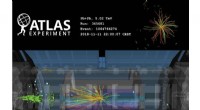
* Particle accelerators: Particle accelerators use special relativity to accelerate particles to near-light speeds, enabling the study of fundamental particles and forces.
* Medical imaging: Positron emission tomography (PET) scans use the principles of special relativity to track the movement of radioactive isotopes within the body.
* High-speed computing: Special relativity has implications for the design of high-speed computers, particularly in the areas of data transmission and processing.
Philosophy and Cosmology:
* The relativity of simultaneity: Special relativity showed that events that are simultaneous for one observer may not be simultaneous for another, challenging our intuitive understanding of time and space.
* The concept of the observer: Special relativity emphasizes the role of the observer in shaping our understanding of reality, leading to new philosophical interpretations of space, time, and causality.
* Understanding the universe: Special relativity is a cornerstone of our current understanding of the universe, providing a framework for studying cosmology, astrophysics, and the nature of gravity.
In summary, the theory of special relativity has revolutionized our understanding of space, time, and the nature of the universe. It has led to groundbreaking technological advancements and has profound implications for our understanding of the world around us.