1. Computing Power for Physics:
* Simulations and Modeling: Physics relies heavily on computer simulations to understand complex phenomena. From astrophysical events to molecular interactions, computers are used to model and predict outcomes that are impossible or too expensive to test physically. This requires powerful algorithms and computational techniques developed within computer science.
* Data Analysis: Experiments in physics generate vast amounts of data. Computer science provides the tools and techniques for analyzing, visualizing, and extracting meaningful insights from this data. Machine learning and statistical analysis play a crucial role in understanding patterns and making new discoveries.
* High-Performance Computing: Solving complex physics problems often requires massive computational power. Computer science has developed advanced hardware and software architectures, like supercomputers and parallel processing techniques, to handle these computational demands.
2. Physics Inspiring Computer Science:
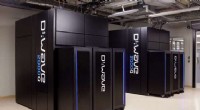
* Quantum Computing: Quantum mechanics, a fundamental theory in physics, has inspired the development of quantum computers. These machines harness the principles of quantum superposition and entanglement to solve certain types of problems exponentially faster than classical computers.
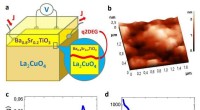
* Nanotechnology: Physics research on nanoscale materials has driven advancements in computer hardware. For example, understanding electron transport in transistors has led to smaller, faster, and more energy-efficient processors.
* Information Theory: Concepts from statistical physics, particularly the study of entropy, have contributed to the development of information theory. This field deals with the quantification and transmission of information, which is crucial for computer communication and storage.
3. Common Ground:
* Algorithms: Computer science and physics both rely on algorithms to solve problems. Optimization algorithms, for example, are used in both fields to find the best solutions within constraints.
* Modeling and Abstraction: Both fields rely on abstract models to represent complex systems. Computer scientists use models to understand software, while physicists use them to describe physical phenomena.
* Data Structures: The efficient organization and manipulation of data is essential in both fields. Computer science develops data structures like trees, graphs, and lists, while physics uses them to represent physical systems and analyze data.
Examples of Intersection:
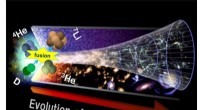
* Astrophysics: Computers are used to simulate black hole mergers, galaxy formation, and the evolution of the universe.
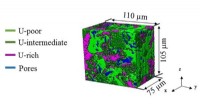
* Materials Science: Simulations help predict the properties of new materials with desired characteristics, such as strength, conductivity, or optical properties.
* Biophysics: Computational methods are used to study protein folding, drug interactions, and the dynamics of biological systems.
In conclusion, computer science and physics are deeply interconnected, each benefiting from the advances and insights of the other. This collaboration is driving innovation and accelerating progress in both fields.