Observations Lead to Laws:
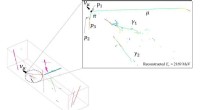
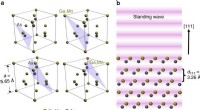
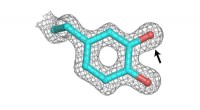
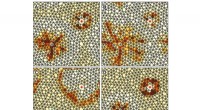
* Foundation of Scientific Inquiry: Observations are the starting point of scientific inquiry. Through careful observation, scientists gather data about the natural world. These observations can be qualitative (descriptive) or quantitative (numerical).
* Identifying Patterns: By analyzing numerous observations, scientists look for patterns and regularities in the natural world. These patterns can be expressed as statements that describe how things behave under certain conditions.
* Formulating Laws: Once a pattern is established through repeated observations and experiments, scientists can formulate a scientific law to describe it. This law is a concise statement that summarizes a large body of observations and predicts how things will behave in the future.
Laws Guide Further Observation:
* Predictive Power: Scientific laws provide a framework for making predictions about future events. This predictive power allows scientists to design experiments to test the validity of the law and explore its limitations.
* Focus of Inquiry: Laws help focus scientific inquiry by providing a specific area of investigation. They direct scientists towards specific phenomena or relationships that need further exploration.
* Refinement and Modification: As new observations are made, laws can be refined or modified to better reflect the growing body of knowledge. This continuous process of observation, hypothesis, and refinement is central to scientific progress.
Examples:
* Newton's Law of Universal Gravitation: This law was formulated based on observations of the motion of planets and objects on Earth. The law predicts the force of attraction between any two objects with mass.
* The Law of Conservation of Energy: This law was established through numerous experiments and observations that showed that energy cannot be created or destroyed, only transformed from one form to another.
In essence, scientific laws are generalizations derived from observations, while observations serve as the basis for formulating and refining laws. The relationship is a continuous loop of observation, hypothesis, experimentation, and refinement.