Here's a breakdown:
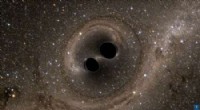
* Gravity: A fundamental force of attraction between any two objects with mass. The more massive the objects, the stronger the gravitational pull. The closer the objects are, the stronger the pull.
* Weight: The force exerted on an object due to gravity. It's a measure of how strongly gravity pulls on the object.
How to calculate weight:
Weight (W) = Mass (m) x Acceleration due to gravity (g)
* Mass: The amount of matter in an object. It's a fundamental property and doesn't change with location.
* Acceleration due to gravity (g): The acceleration experienced by an object due to gravity. On Earth, g is approximately 9.8 m/s². This value can vary slightly depending on location.
Example:
Let's say you have a mass of 60 kg. To find your weight on Earth:
W = 60 kg x 9.8 m/s² = 588 N (Newtons)
Important Note: Weight is a force, so it's measured in units of force like Newtons (N). Mass is a measure of the amount of matter and is measured in kilograms (kg).