1. Optics: This is the most fundamental connection. The eye functions as a sophisticated optical system, using lenses and the principle of refraction to focus light onto the retina.
* Refraction: Light bends as it passes from one medium to another (like air to the cornea). The cornea and lens work together to refract light, focusing it onto the retina.
* Accommodation: The lens can change shape, controlled by tiny muscles, to adjust focus for different distances. This is how we can see objects both near and far.
* Pupil: The adjustable opening in the iris controls the amount of light entering the eye, regulating brightness and preventing glare.
2. Light and Vision:
* Electromagnetic spectrum: The human eye is sensitive to a narrow range of electromagnetic radiation, what we call visible light.
* Photoreceptor cells: The retina contains specialized cells called rods and cones. Rods detect light intensity (allowing us to see in low light), while cones detect color.
* Color vision: Our perception of color arises from the different wavelengths of light stimulating different cones.
* Image formation: The retina creates an inverted image of the world, which the brain then processes to create our perception of upright vision.
3. Wave-Particle Duality:
* Light as a wave: The behavior of light in the eye is explained by wave properties, like diffraction and interference.
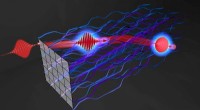
* Light as a particle: The interaction of light with the photoreceptor cells in the retina is best understood by considering light as a stream of particles called photons.
4. Mechanics:
* Eye movements: The muscles controlling eye movement exhibit principles of mechanics, like levers and torque.
* Pressure and fluid dynamics: The shape of the eyeball and the pressure within it are crucial for maintaining its structural integrity.
5. Beyond the Eye:
* Brain processing: The eye is just the first step in vision. The brain interprets the signals from the retina, creating our perception of the world, a complex process involving neural networks and information processing.
In conclusion, understanding how the human eye works requires knowledge from various branches of physics: optics, mechanics, wave theory, and even aspects of quantum physics. It's a testament to the intricate interplay between physics and biology, and a reminder of the amazing complexity of our natural world.