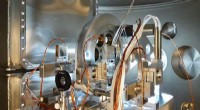
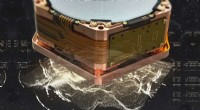
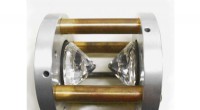
* Lasers require a specific set of conditions: Lasers work by stimulating atoms to emit photons in a coherent and amplified way. This requires a specific medium (like a crystal or gas), an energy source to excite the atoms, and a resonant cavity to amplify the light. These conditions are extremely precise and don't exist naturally.
* Natural light is incoherent: Light from the sun, stars, and other natural sources is incoherent, meaning the photons are emitted randomly in different directions and at different wavelengths. This is the opposite of a laser beam, which has coherent light emitted in a single direction and wavelength.
However, there are some natural phenomena that share certain characteristics with lasers:
* Maser emissions: Masers (Microwave Amplification by Stimulated Emission of Radiation) are similar to lasers but operate in the microwave frequency range. Some natural masers have been observed in space, where molecules like water and hydroxyl radicals can emit coherent microwave radiation.
* Certain biological processes: Some biological processes, like photosynthesis, involve the absorption and emission of light in a way that could be considered somewhat "laser-like." However, these processes lack the precise control and amplification that characterize a laser.
In conclusion: While there are natural phenomena that share some features with lasers, the precise conditions needed to produce a true laser beam don't exist naturally.