Here's a breakdown:
What is Refraction?
Refraction is the bending of light as it passes from one medium (like air) to another (like water) at an angle. This bending happens because light travels at different speeds in different mediums.
How Does It Work?
* Speed of Light: Light travels fastest in a vacuum (like space), and slower in other mediums. The denser the medium, the slower the light travels.
* Angle of Incidence: When light hits a boundary between two mediums, it can be reflected (bouncing off) or refracted (bending). The angle at which light hits the boundary is called the angle of incidence.
* Angle of Refraction: The angle at which light bends as it enters the new medium is called the angle of refraction. This angle is related to the speed of light in both mediums.
Why Does Light Bend?
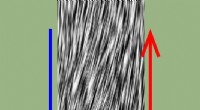
Imagine light waves as soldiers marching in a line. When they hit a denser medium, the soldiers on the side that hits the medium first slow down. The soldiers in the middle continue at their original speed, causing the line of soldiers to bend.
Example:
* When you put a straw in a glass of water, it appears bent at the surface. This is because the light from the straw travels through air and then water, causing it to bend.
* The same principle applies to lenses in eyeglasses. They use the refraction of light to correct vision problems.
Important Points:
* Index of Refraction: A measure of how much light bends when entering a medium is called the index of refraction. A higher index means the light bends more.
* Snell's Law: A mathematical formula describes the relationship between the angle of incidence, angle of refraction, and indices of refraction of the two mediums.
Let me know if you'd like to know more about any specific aspect of refraction!